
Inspections play an important role in every business. They help ensure that daily operations, safety standards, cleanliness, and compliance rules are being followed properly. When inspections are accurate, businesses can prevent risks and maintain quality.
Earlier, most inspections were done manually using paper checklists, Excel sheets, or messages. While this method worked at one time, it increased risks as businesses started growing. Manual inspections often lack accuracy, visibility, and proof.
In 2026, digital inspections have become a safer and more reliable alternative. They help businesses maintain control, reduce errors, and protect important inspection data.
Risks of Manual Inspections
Manual inspections come with many challenges. Paper checklists can be lost, damaged, or misplaced. Excel files can be overwritten or edited multiple times without any tracking.
Important checkpoints are often missed due to workload or human error. This issue is more common than it seems. Businesses using paper or spreadsheet-based inspections report that 20–30% of inspection records contain missing or inconsistent data due to manual errors and delayed updates.
There is also no clear proof of when and where the inspection actually happened. In many cases, reports are shared late, which delays approvals and corrective actions.
These gaps increase operational and compliance risks for businesses.
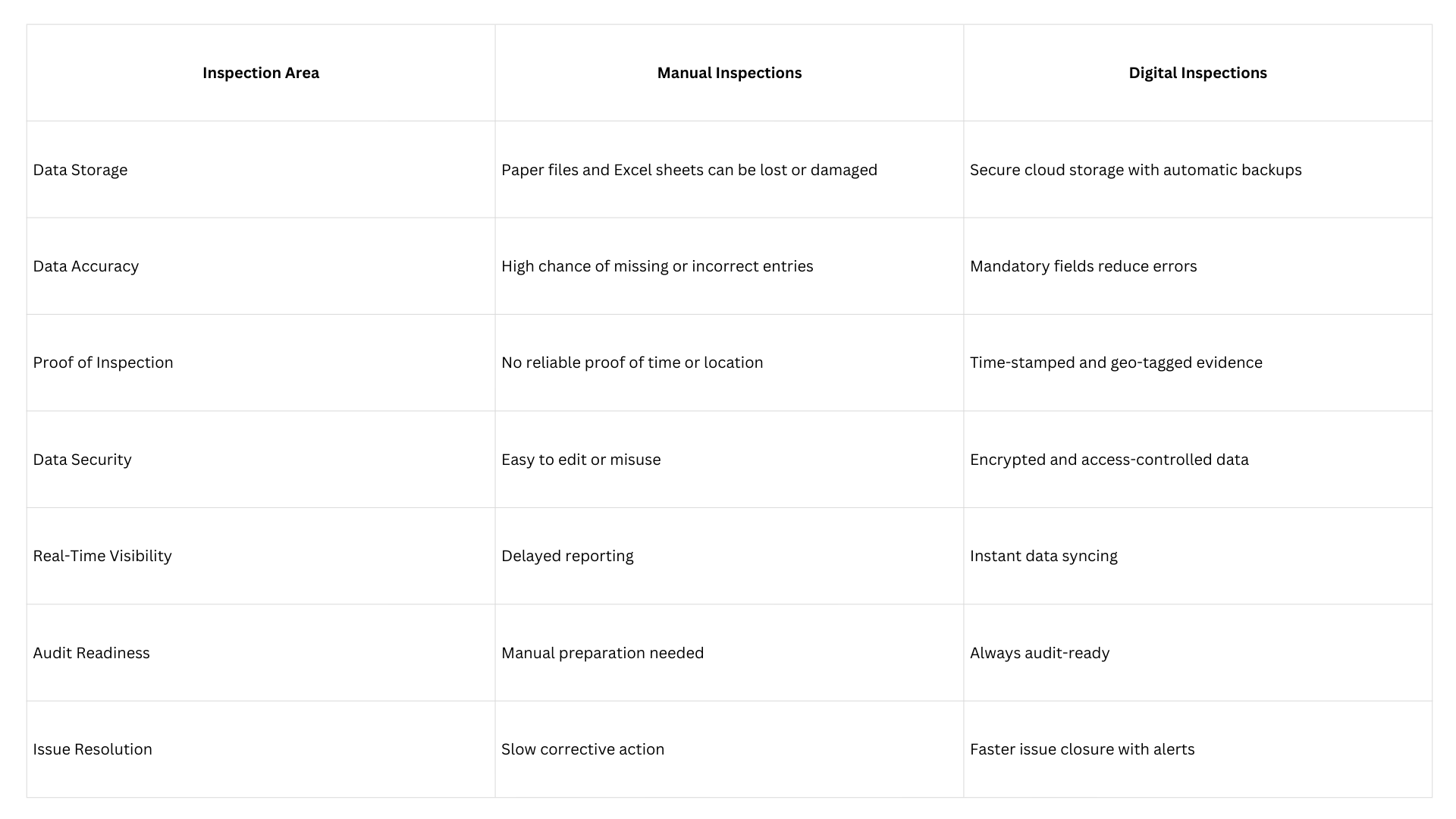
Secure Data Storage
Digital inspections store all inspection data securely in the cloud, reducing the risk of data loss caused by physical damage, device failure, or manual handling. Cloud-based inspection software ensures that inspection reports remain safe, centralized, and accessible.
All digital inspection records are saved automatically and backed up regularly, enabling managers to access both historical and real-time inspection reports anytime without searching through paper files or spreadsheets. This improves inspection data visibility and operational efficiency.
Only authorized users can view, edit, or manage inspection data, ensuring strong inspection data security and protecting sensitive compliance information.
Role-Based Access & Permissions
Modern digital inspection systems offer role-based access control, allowing inspectors, managers, and administrators to have permission levels aligned with their responsibilities.
This prevents unauthorized data edits, reduces misuse, and strengthens inspection data integrity. Every inspection activity is linked to a specific user, improving transparency, traceability, and accountability across the organization.
With clear user ownership and access controls, managers can trust inspection reports because they know exactly who conducted, reviewed, and approved each inspection.
Real-Time Data Capture
With digital inspections, inspection data is captured in real time using mobile devices or tablets. As soon as an inspection is completed, the information is instantly synced to the cloud-based inspection platform.
Managers gain real-time visibility into store, site, or facility conditions without waiting for manual updates or follow-ups. This allows teams to identify safety issues, quality gaps, and compliance risks early and take faster corrective action.
In fact, organizations that shift to digital inspections typically identify operational or safety issues 40–50% faster because inspection data is captured, shared, and analyzed in real time.
Real-time inspection insights reduce delays, improve operational safety, and support faster decision-making across multi-location operations.
Photo, Video & Evidence Capture
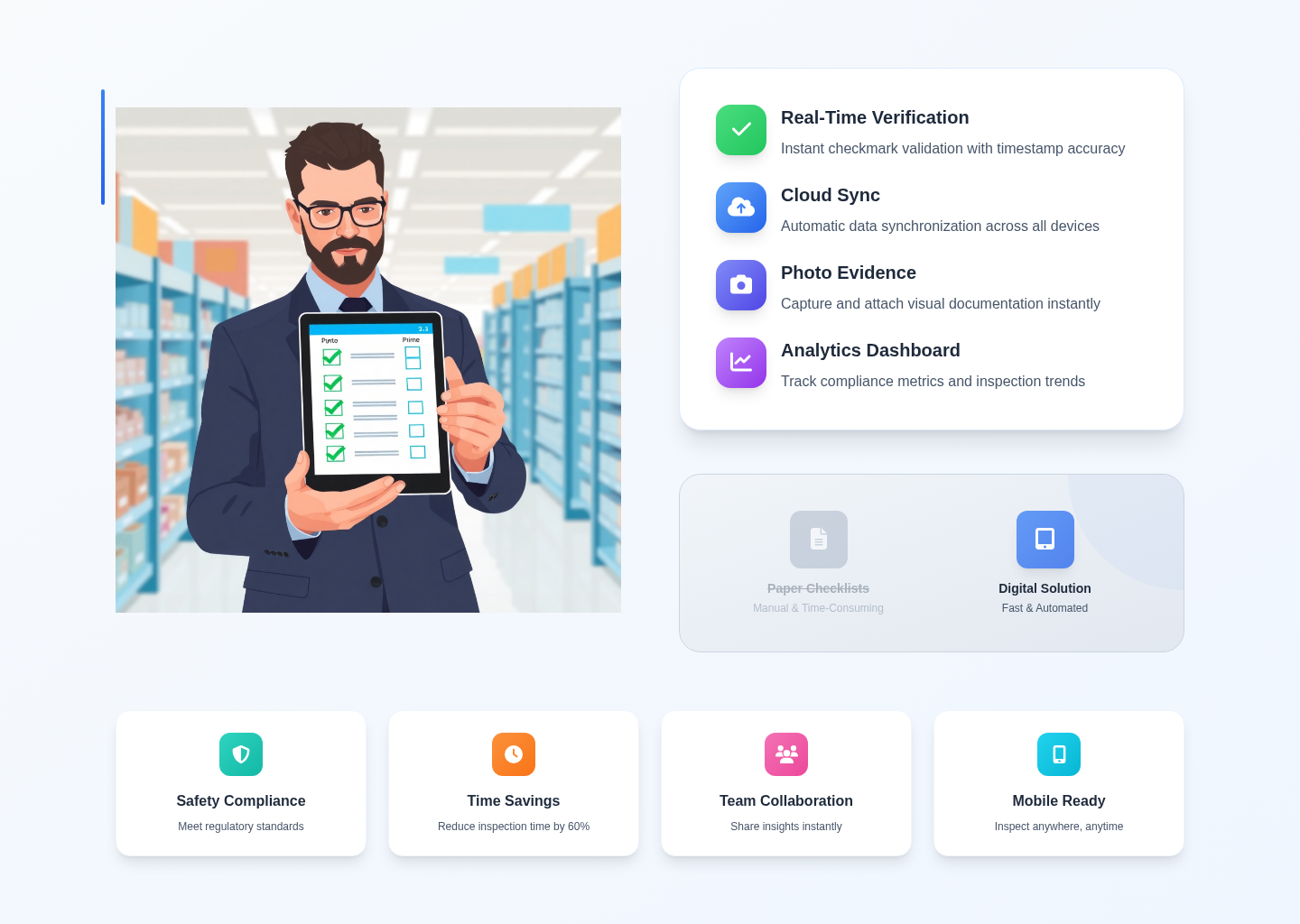
Digital inspections allow inspectors to upload photos and videos during the inspection process. These can be made mandatory to ensure proper verification.
Each image is time-stamped and geo-tagged, providing clear proof of inspection activity. This creates a strong audit trail and removes doubts about report authenticity.
Visual evidence helps managers gain a clear understanding of the actual situation on the ground.
Error Reduction
In manual inspections, incomplete forms are a common occurrence. Digital systems prevent this by making required fields mandatory.
Smart logic and conditional questions ensure that only relevant questions appear based on responses. This reduces confusion and human error.
As a result, inspection data becomes more accurate and consistent across all locations.
Compliance & Audit Readiness
Digital inspection records are always audit-ready. All data is stored in an organized format and can be retrieved easily whenever required.
Businesses no longer need to prepare separately for audits. Historical records, photos, and reports are available within seconds.
This improves regulatory compliance and reduces stress during inspections or reviews.
Data Security
Digital inspection software use encrypted data transmission to protect information while it is being shared or stored.
Secure servers help prevent unauthorized access and data leaks. This level of security is difficult to achieve with manual or spreadsheet-based systems.
Strong data protection ensures business information remains confidential and safe.
Faster Issue Resolution
One of the biggest safety benefits of digital inspections is faster issue resolution. Instant alerts and notifications inform managers as soon as a problem is reported.
Corrective actions can be assigned immediately, reducing the chance of repeat issues. This helps control risks before they turn into major operational or safety concerns.
Conclusion
Digital inspections offer a safer, smarter, and more reliable way to manage business operations. They reduce risks, improve accuracy, protect data, and ensure compliance.
As businesses continue to grow in 2026, relying on manual inspection methods is no longer practical. Shifting to digital inspections helps organizations stay future-ready, maintain high standards, and operate with confidence.
The future of inspections is digital, and businesses that adopt it today are better prepared for tomorrow.


