
The Shift From Manual to Digital Inspections
Earlier, inspections were mostly done using paper checklists, Excel sheets, or sometimes WhatsApp messages. At that time, these methods were acceptable, but they were not very clear or reliable. Many important points were missed, reports were incomplete, and managers often had no proper visibility of what was actually happening at the stores.
Now in 2026, businesses are growing rapidly, and managing inspections using old methods has become very difficult.
What Has Changed in 2026
Today, most brands do not operate from just one location. They have multiple stores spread across different cities and regions. When managers are sitting in one place, and stores are running in many areas, tracking daily operations becomes challenging.
Simple questions like whether the store is clean, staff is present, or daily tasks are completed properly are not easy to answer without a structured system.
Social media has also increased pressure on businesses. If a store is dirty or customer service is poor, anyone can take a photo and post it online instantly. This can damage the brand image within minutes. Digital inspections help identify issues early so they can be fixed before customers notice them. It also helps maintain compliance, as all inspection records are stored properly.
Earlier, many businesses avoided software because it was expensive and difficult to use. But today, technology has improved a lot. Inspection management software is now affordable, user-friendly, and easy to understand. Even store staff can use it with minimal training, and managers can read reports without technical knowledge.
How Inspection Management Software Works
Inspection management software brings all inspection activities into one platform. Managers can view store reports anytime and from anywhere. During inspections, photos can be added, helping managers see the actual condition of the store instead of relying only on messages or phone calls.
This creates transparency and gives managers a clear picture of what is happening on the ground.
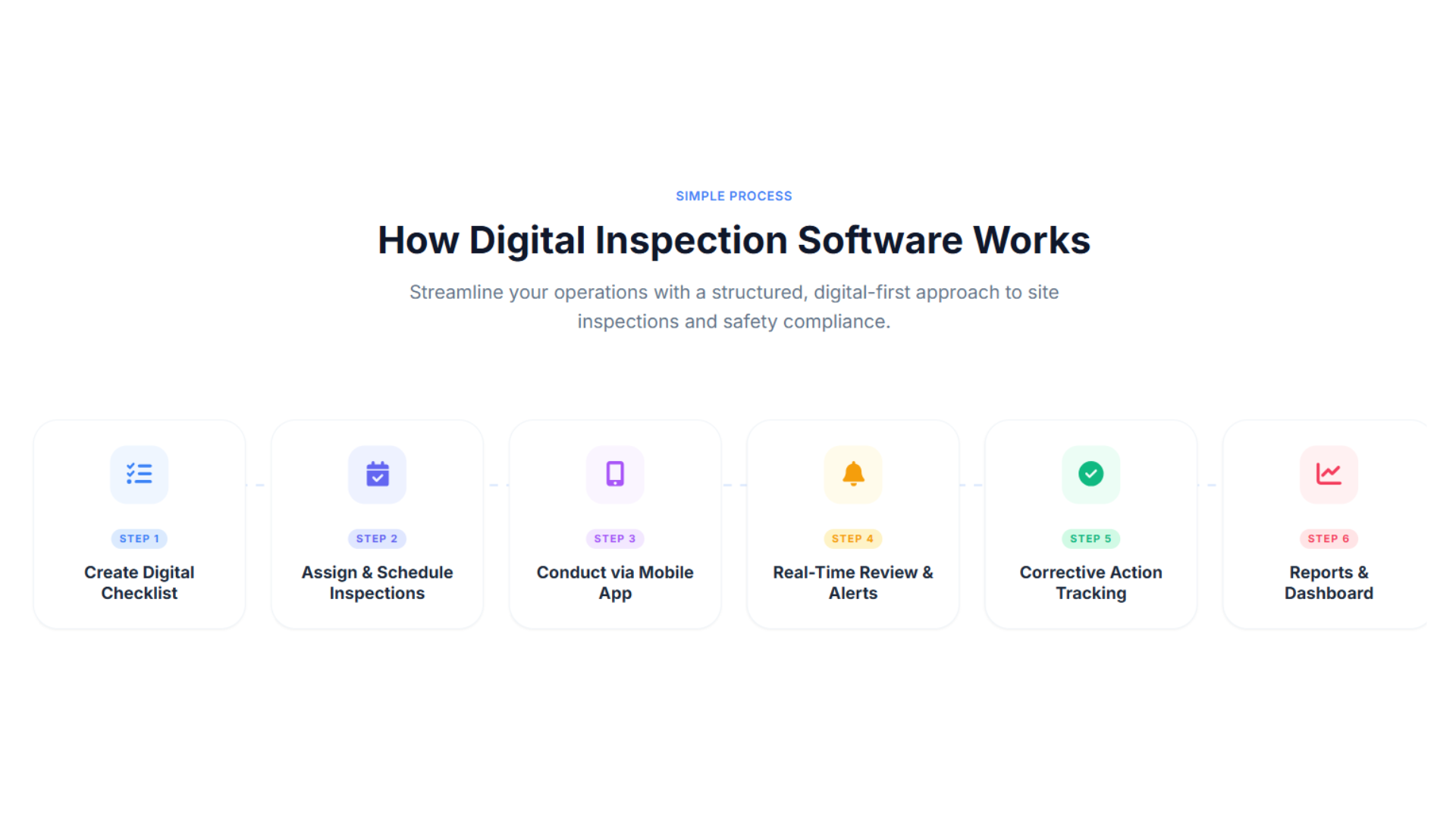
Here is the simple workflow:
How Digital Inspections Support Business Growth
Digital inspections make managing multiple stores much easier. All store updates can be viewed from a single dashboard. Managers can compare store performance and identify which locations are doing well and which ones need improvement.
This allows leadership teams to focus more on business growth rather than repeatedly solving the same operational issues.
Without a digital system, both time and money often get wasted. It becomes difficult to track staff attendance, daily responsibilities, or machine usage. When inspections are monitored digitally, staff members become more alert and responsible, which improves overall discipline and performance.
60% of managers say they do not get real-time visibility into field or store operations when inspections are done manually.
(Source: PwC Operations Survey)Organizations using manual inspection processes are 3 times more likely to face compliance failures during audits.
(Source: Deloitte Risk & Compliance Report)
Companies using digital inspection tech have reported up to 95% lower defect rates and inspection times roughly 40% faster than traditional manual checks. oxmaint
How Business Risks Are Reduced
Another major benefit is secure data storage. Inspection reports are saved safely and can be accessed anytime. Managers can view real-time data as well as past inspection records whenever needed.
Even if something was missed earlier, the information is still available. This helps businesses with better planning, audits, and decision-making.
One of the biggest advantages is that managers do not need to be physically present at every store. Whether they are traveling or working remotely, they can easily monitor store performance and pending issues. This provides better control, visibility, and peace of mind.
Social Media Risk and Brand Reputation
Social media has become one of the biggest risks for businesses. A single negative post, photo, or video from a customer can spread within minutes and reach thousands of people. Issues like poor cleanliness, unsafe conditions, or bad customer service are no longer private problems. They quickly become public and can harm a brand’s reputation instantly. Without regular and structured inspections, such issues often go unnoticed until they appear online. Digital inspection software helps businesses identify and fix problems early, reducing the risk of negative publicity and protecting brand trust.
Final Thoughts
In 2026, inspection management software is no longer an optional tool. It has become a basic requirement for businesses that want to grow in a structured and controlled way.
It helps save time, reduce risks, improve quality standards, and protect brand image. Once a business starts using digital inspections, it becomes very difficult to return to paperwork. This shift is happening because companies now want a smarter, simpler, and more efficient way to manage their operations.


