
(What actually matters when audits happen in the real world)
Most audit software looks fine in demos.
The real test begins when people are in the field, under pressure, doing real work.
What follows are 10 must-haves that separate software that merely digitizes audits from software that actually improves adoption, trust, and outcomes.
1. A consumer-grade mobile app that people enjoy using
Most business software is boring. It gets you from A to B, but it forgets that humans are doing the work. In audits, this matters a lot more than people realize.
The mobile app is the main surface of any audit platform. It’s used by nearly 90% of the organization — auditors, field teams, and managers fixing issues on-site. If this experience feels heavy or clunky, adoption quietly drops.
A good way to evaluate an audit app is to compare it to consumer apps, not enterprise tools. You can listen to music on multiple apps with the same catalog, yet the experience feels completely different depending on readability, responsiveness, and how gently the app guides you.
Audit software should meet the same bar.
Joy, vibrancy, and ease of use are not “nice-to-haves” — they are foundational.
2. Zero-latency performance in the field
This sounds obvious, but it’s often misunderstood.
It’s not enough for audit software to simply work. It must work fast, consistently, and without hesitation. Audits happen in basements, kitchens, shop floors, and noisy environments where patience is low and time is limited.
Any lag — loading screens, delayed saves, frozen screens — breaks flow. Once flow breaks, people rush, skip questions, or postpone audits altogether.
Performance is not a technical feature.
It’s a trust feature.
3. Capture the full spectrum of audit data
An audit is about capturing a true picture of operations. Many tools stop at objective questions, text comments, and a few images. Real audits need more.
During inspections, auditors often need to verify supporting evidence such as vehicle registration certificates, fire safety approvals, or evacuation plans. These are not optional attachments; they are core evidence.
A good audit platform should comfortably handle:
images, without artificial limits
documents that validate compliance
signatures where accountability is required
If any part of the evidence is forced outside the system, the audit record is incomplete.
4. A strong notification system that pulls people in
Most professionals already live inside email, calendars, and messaging tools. They do not keep audit software open all day.
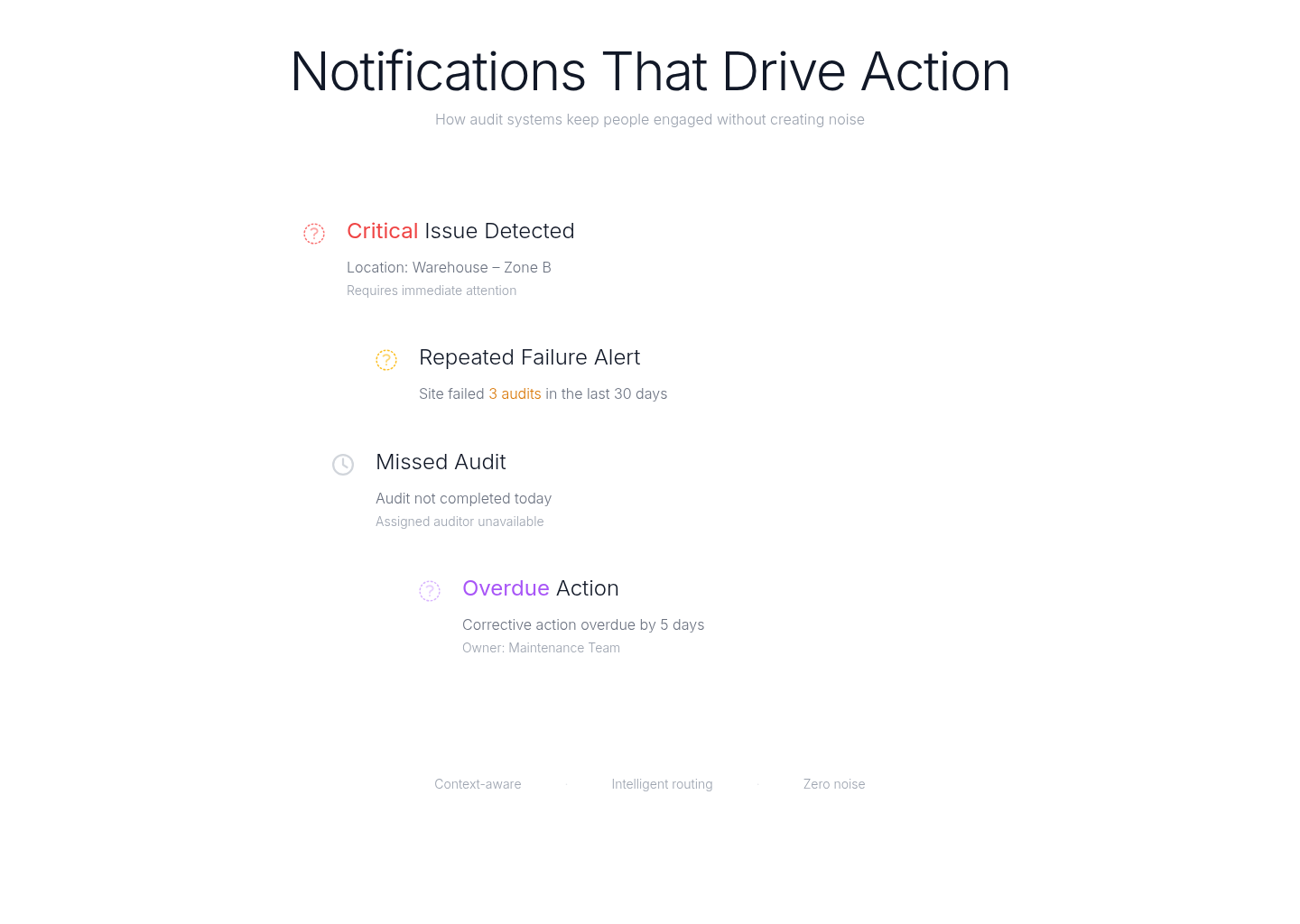
That means the system must pull users in, not wait for them to come. This pull is created through alerts, reminders, and configurable notifications.
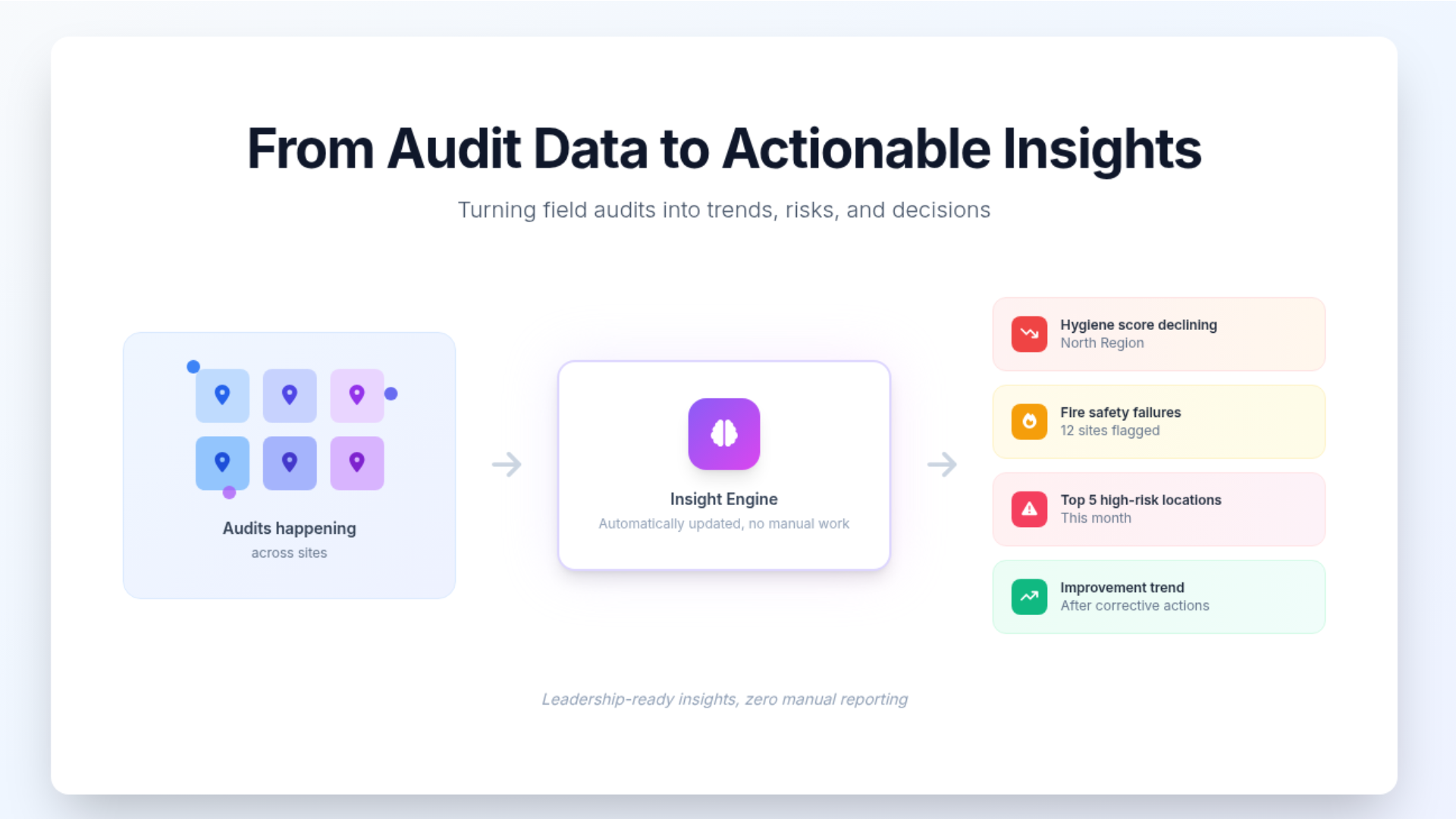
Executives, in particular, won’t log in daily to check audit findings. Critical issues, worrying trends, or high-risk locations should reach them automatically, usually via email. They should be able to scan insights where they already are, decide whether to dive deeper, and only then come to the platform.
Monthly MIS reports are too slow for this. Audits happen in real time, and findings should move at the same speed.
5. System-driven logic that keeps audits focused and relevant
This is where many audit programs quietly fail.
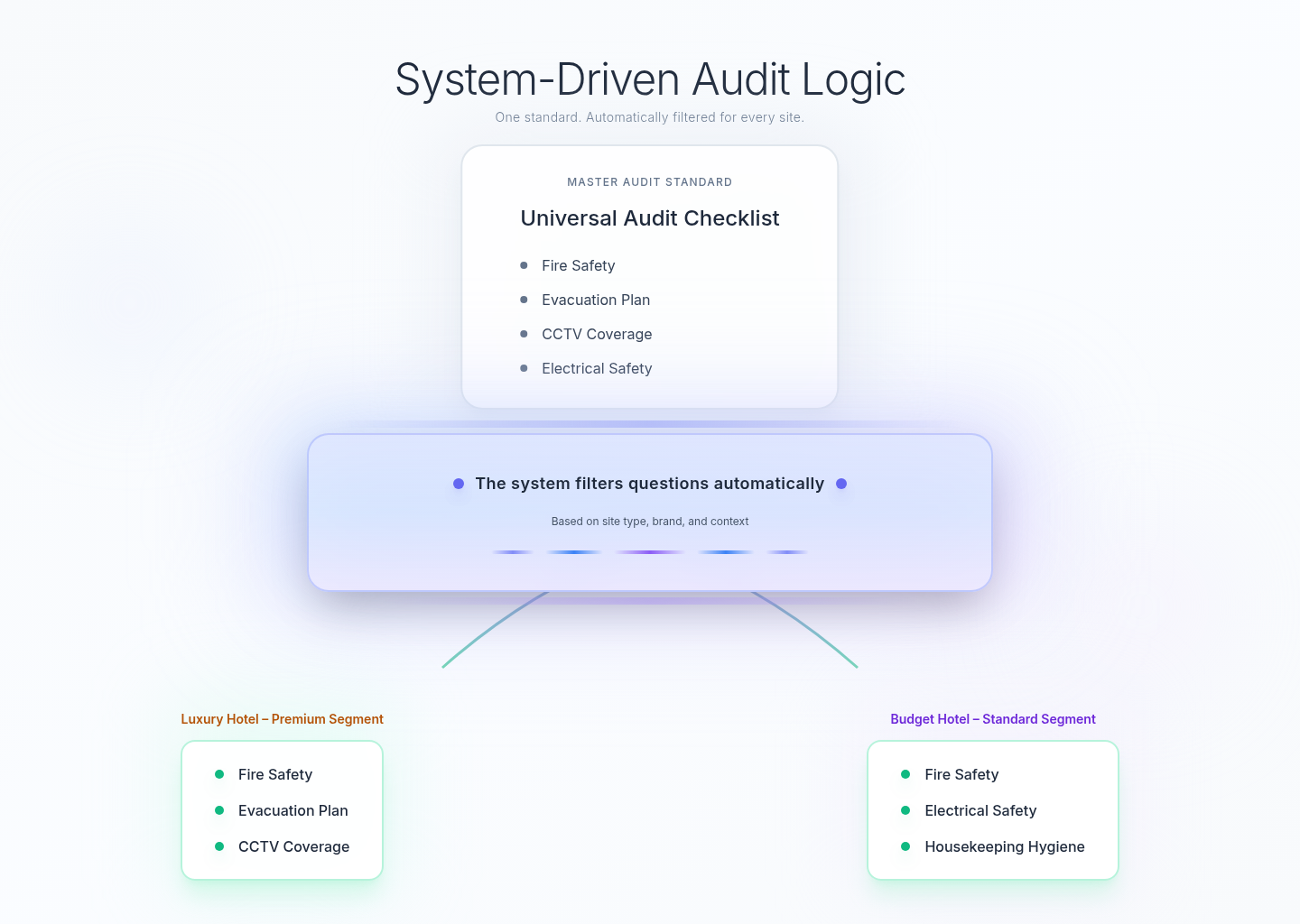
Consider a global hospitality company with 5,000 hotels, multiple brands, and operations across geographies. They run safety and security audits using a single master checklist, which is the right decision for analytics and standardization.
However, not every question applies everywhere:
different brands
different regulations
different risk profiles
different operating contexts
A strong audit system automatically renders only the questions relevant to a specific brand and geography. An auditor inspecting a hotel in Qatar for Brand X might see 300 relevant questions out of a master list of 500.
The auditor should not have to decide applicability, remember regulations, or repeatedly mark “not applicable.”
The system should do that thinking.
6. Real-time, automated distribution of audit findings
Auditors already deal with resistance, time pressure, and accuracy expectations. They should not also be responsible for deciding who gets the audit report and when.
If sharing is manual, findings get delayed, forgotten, or lose relevance.
A good audit platform automatically distributes reports to the right stakeholders, whether through email or internal channels. This ensures that findings reach decision-makers while they still matter, without adding extra burden on auditors.
7. Built-in workflows to fix issues, not just find them
Finding non-compliance is only half the job. Real value is created when issues are fixed quickly and responsibly.
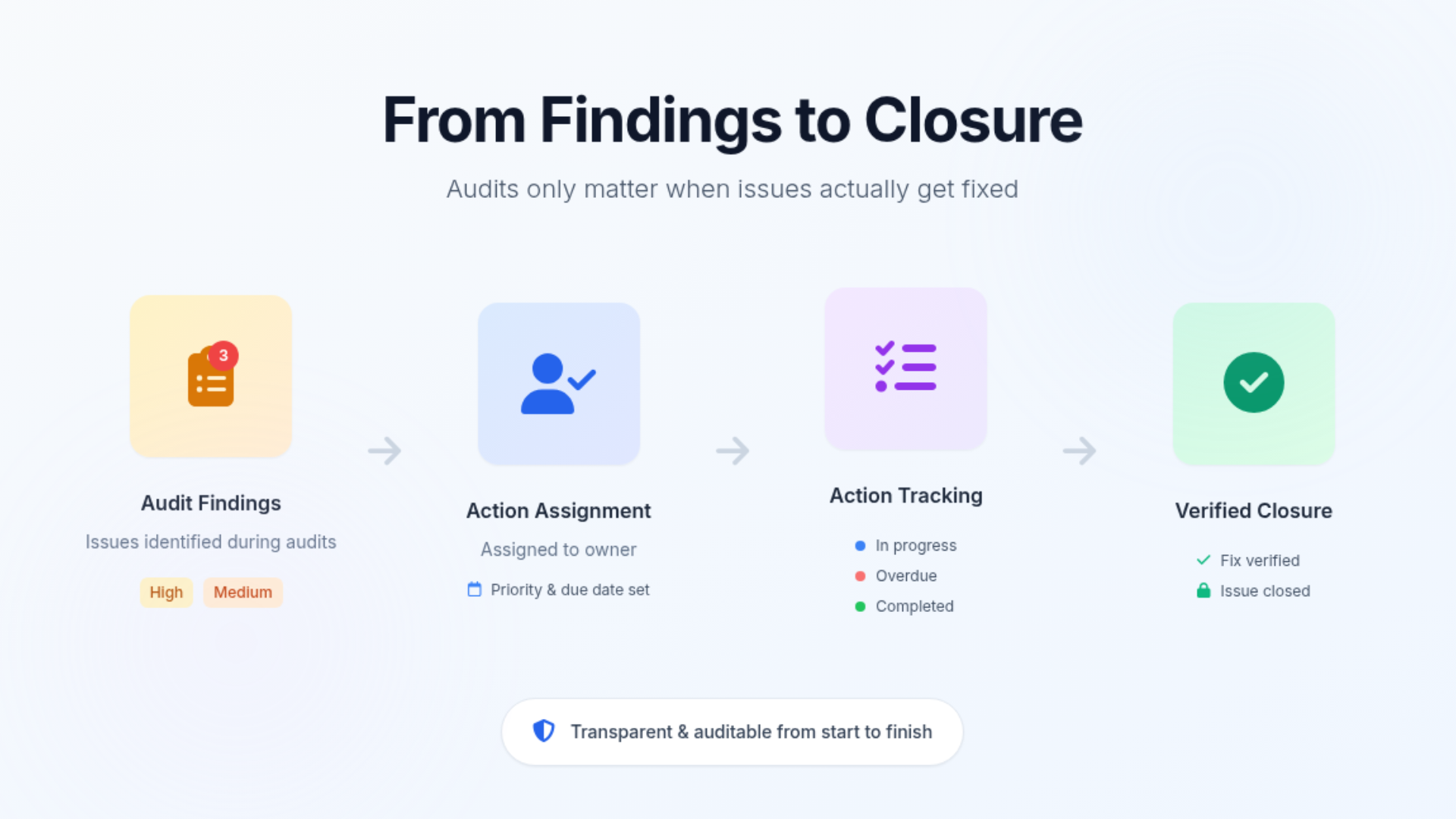
If, after an audit, everything moves back to emails and spreadsheets, you’re only digitizing reports. Digital transformation happens when corrective actions are created, assigned, tracked, and closed inside the system.
A good audit platform enforces accountability, timelines, and traceability from finding to closure. Without this, audits become documentation exercises rather than improvement drivers.
8. Save time for QA leads and program managers
QA leads don’t just ensure audit coverage. They are also responsible for explaining results to leadership.
Too often, they spend hours extracting data, reconciling numbers, and formatting charts for executive meetings. This is avoidable.
A strong audit system should provide clean, ready-to-use data that can be exported directly into presentations and MIS reports. The goal is simple: fewer late nights, fewer embarrassing corrections, and more confidence in the numbers being presented.
9. Built-in mechanisms to prevent fake or low-quality data
Audit programs don’t collapse because of many bad audits. They collapse because of a few untrustworthy ones.
Shortcuts happen — audits done from home, reused images, rushed submissions, or consistently high scores that don’t match reality. Good audit software should proactively prevent this.
This includes mechanisms like:
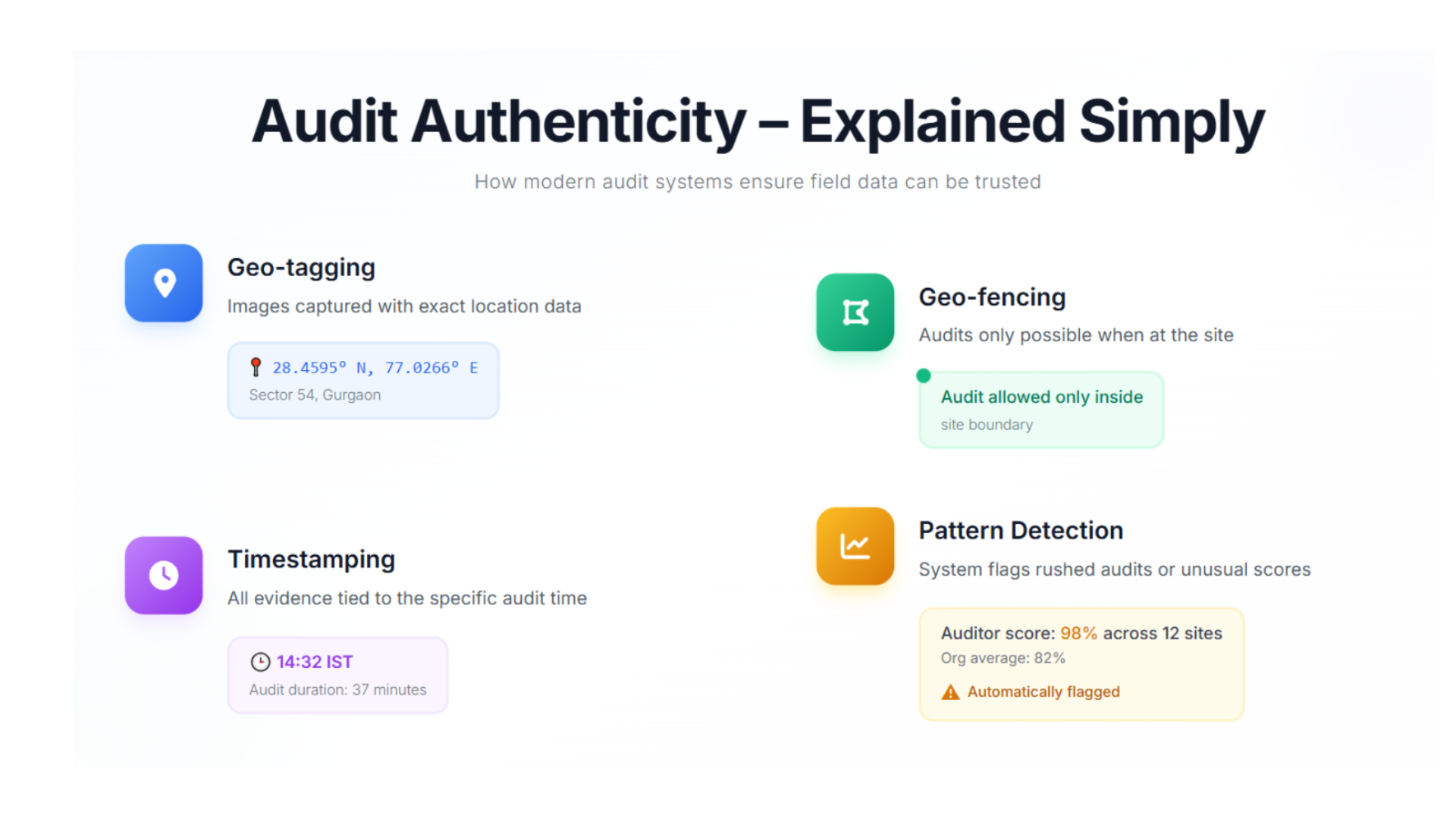
geo-fencing to ensure on-site audits
geo-tagged and timestamped images
tracking audit duration
flagging abnormal scoring patterns
Nobody has time to manually inspect every image or timestamp. The system must surface these risks automatically. Trust, once lost, is very hard to rebuild.
10. Integrations and APIs that make audits part of daily operations
No modern system works in isolation.
Executives already have dashboards. Maintenance teams already use ticketing tools. Vendors and regulators often need shared data. Audit software should fit into this ecosystem, not sit on the side.
A good platform integrates with existing systems, pushes findings where work already happens, and exposes data through APIs when needed. The core job is to capture field truth — what the organization does with that truth should not be limited by silos.
Closing thought
Choosing audit software isn’t about ticking feature boxes.
It’s about designing behavior — in the field, in management, and at leadership level.
When software feels good to use, thinks on behalf of users, protects data integrity, and drives closure, audits stop being a burden and start becoming an advantage.


